phuquoc.world
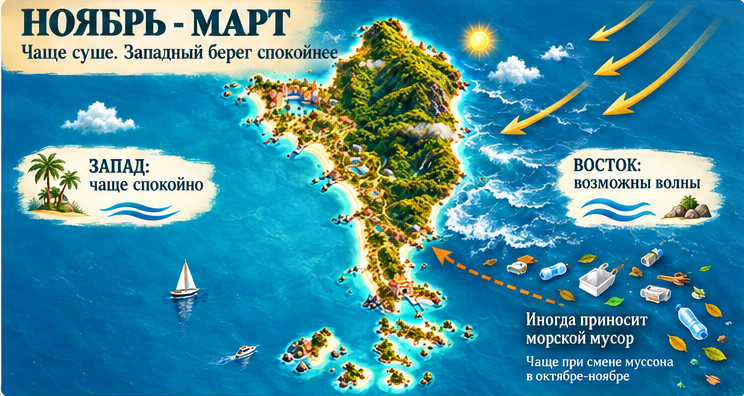
November-March: sunshine and western beaches
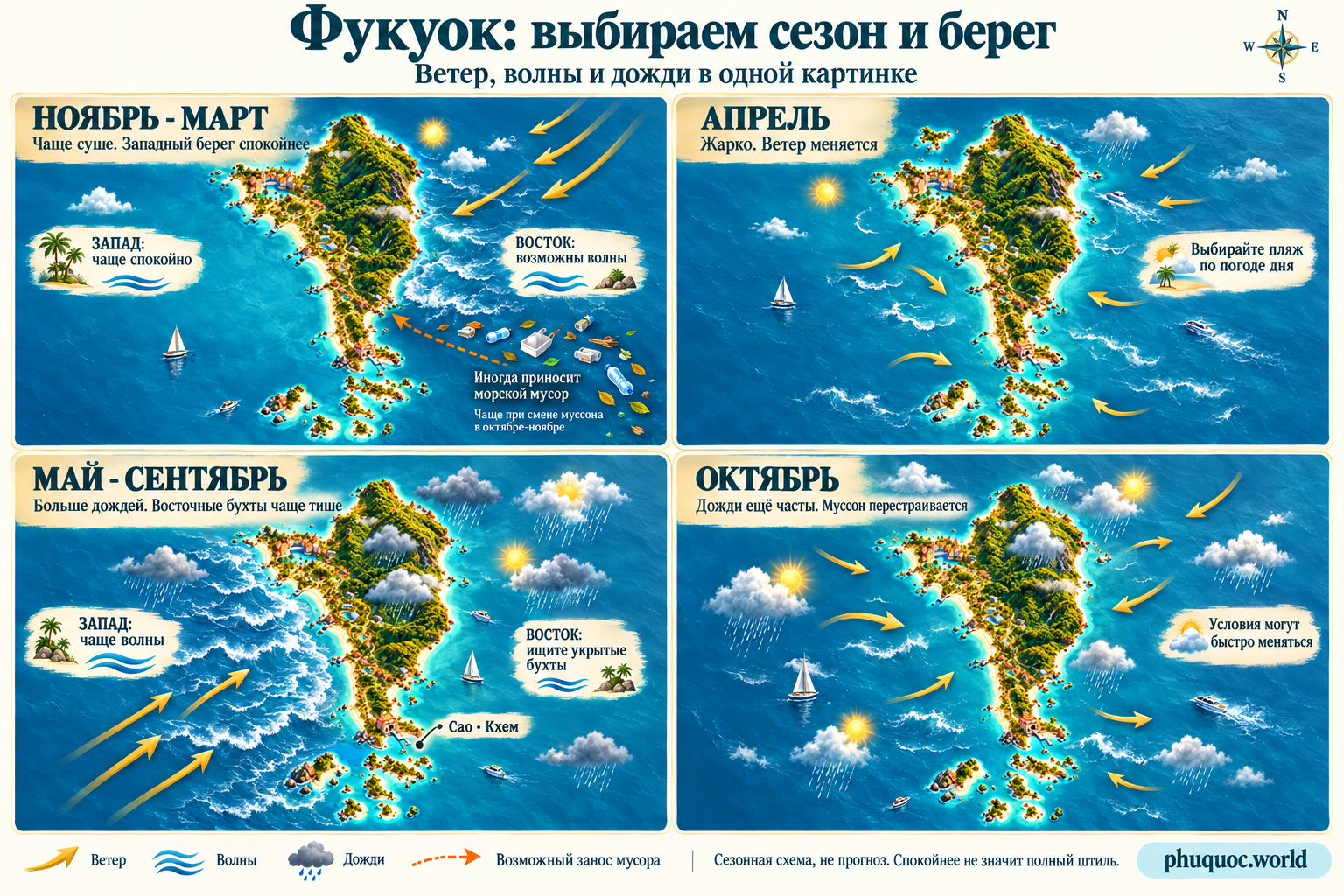
Winds more often arrive from the east and northeast. The island shelters its western coast, so consider Bãi Trường (Long Beach), Ông Lang (Ong Lang) and Bai Dai for a beach holiday. The eastern side may have waves on the same days.
November can still be rainy. January and February were the most consistently dry months in the 2023-2025 observations. March sometimes brings considerably more rain than you might expect in the ‘dry season’.
What about litter on the eastern coast? During the northeast monsoon, the sea sometimes carries floating rubbish towards eastern beaches. Particularly noticeable episodes have been reported around the October-November seasonal change. Rain and river runoff can carry waste from land into the sea, while wind, waves and currents move it towards the island. It may come from the mainland, Phu Quoc itself or vessels. It is not possible to say that all the waste came from the mainland after a particular downpour.
For visitors, recent photographs of the specific beach and information about how often it is cleaned are more useful. Neighbouring stretches can differ greatly in cleanliness.
 Open the large map ↗
April: hot weather and changing seas
The transition between monsoons brings more variety: sunny days, occasional downpours and shifting winds. Do not choose a coast by the calendar alone. Check where the wind is coming from on your day out: the sheltered side is often more pleasant for swimming.
 Open the large map ↗
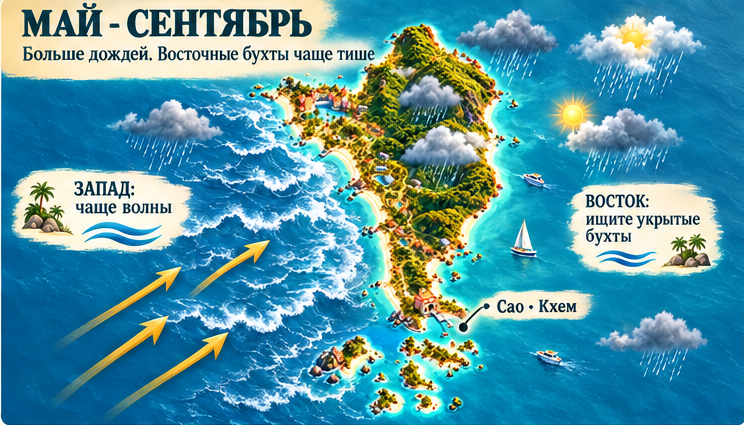
May-September: more rain, often quieter eastern bays
Winds gradually turn and more often arrive from the west and southwest. They blow directly onto western beaches and raise waves. More sheltered places can be found on the eastern side, including Sao and Khem. Conditions within each bay depend on wind direction.
The east does not become a dry zone: rain falls across the island, and shelter from waves does not mean shelter from clouds. Keep beach visits and walks flexible, allow a spare day for a boat excursion, and choose a hotel where you would enjoy spending time during a downpour.
 Open the large map ↗
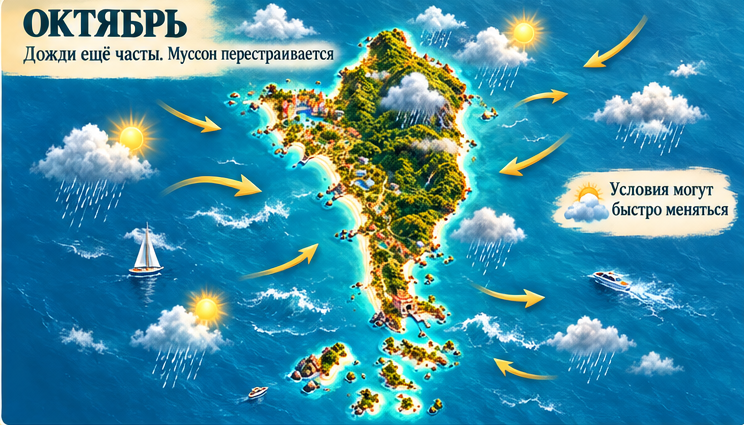
October: do not assume the dry season has begun
Rain can remain heavy as the wind starts to change. In 2025, October was one of the wettest months. Current forecasts and the condition of your particular beach are especially useful at this time. As northeasterly winds appear, episodes of marine litter reaching the eastern side are possible.
 Open the large map ↗
What the last three years showed
Phu Quoc station recorded approximately 2.5 metres of rain in 2023, 3.6 metres in 2024 and 4.1 metres in 2025. The difference is substantial: a seasonal calendar helps you plan a trip, but does not promise the same weather every year.
The clearest takeaway: January-February are more often dry; flexible plans are especially useful from May to October. Monthly rainfall totals do not tell you how many hours it rained. Neither ‘it pours all day’ nor ‘rain always lasts just half an hour’ can be promised.
JMA: rainfall in 2023 ↗JMA: rainfall in 2024-2025 ↗Before heading to the sea
- In winter, start your search for a calm beach on the west coast; in summer, try sheltered eastern bays.
- Check wind direction and local beach flags, not just the sunshine icon in a forecast.
- For a boat excursion, check conditions along the entire route: the sea may be calm at your hotel but rough in a strait.
- A calm surface does not mean there are no currents. There is no single permanent current arrow around Phu Quoc.
Sources and how to read the map
Rainfall comes from official observations at one station, Phu Quoc, WMO 48917, for 2023-2025. Seasonal coast assessments are based on monsoon patterns and coastline exposure. The map is an explanatory diagram, not a marine navigation forecast. Arrows indicate wind and possible litter transport, not measured sea currents. Monsoon changeover dates vary from year to year.
Build your itinerary
This guide helps you plan. Check schedules, access, prices and weather before leaving.
Trip planner ↗Tours and tickets ↗